
Russian art is increasingly becoming part of the international cultural context. But a genuine dialogue begins not when artworks are simply exhibited abroad, but when they enter into direct interaction with another culture, architecture, history, and a new audience.
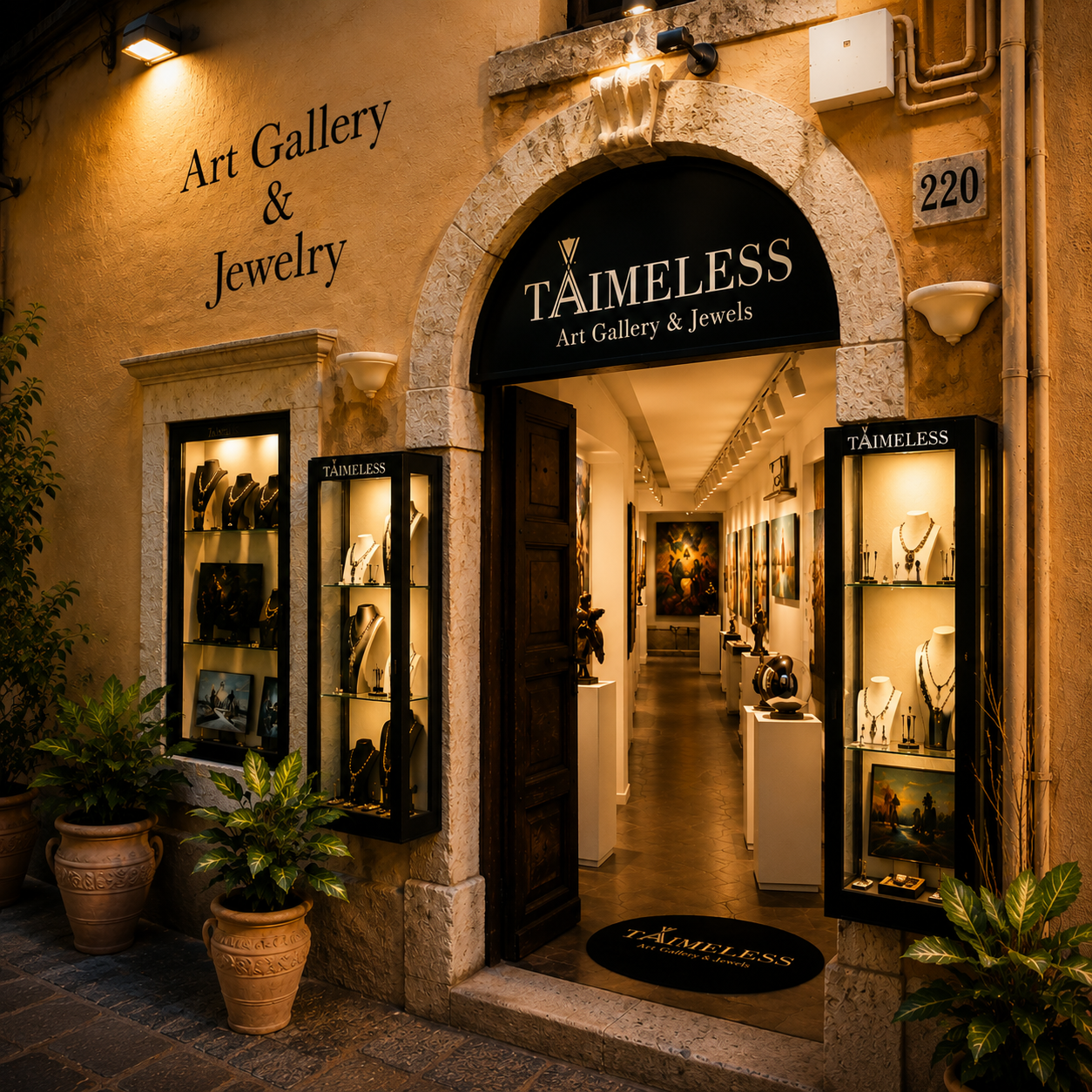
This is exactly what happened with Beyond Time — “Beyond Time: A Dialogue Between Russia and Eternity,” an international art project that took place in Italy in the summer of 2026. Its journey began in Pulsano, Apulia, and continued to Taormina in Sicily.
Why was Taormina chosen for this international project? How did Russian artists find themselves in the historic setting of Taimeless Art Gallery? Who was behind the organization of the exhibition? And what happens to an artwork when it is presented to viewers who are unfamiliar with the Russian art scene?
From Pulsano to Taormina: The Exhibition Has a Journey

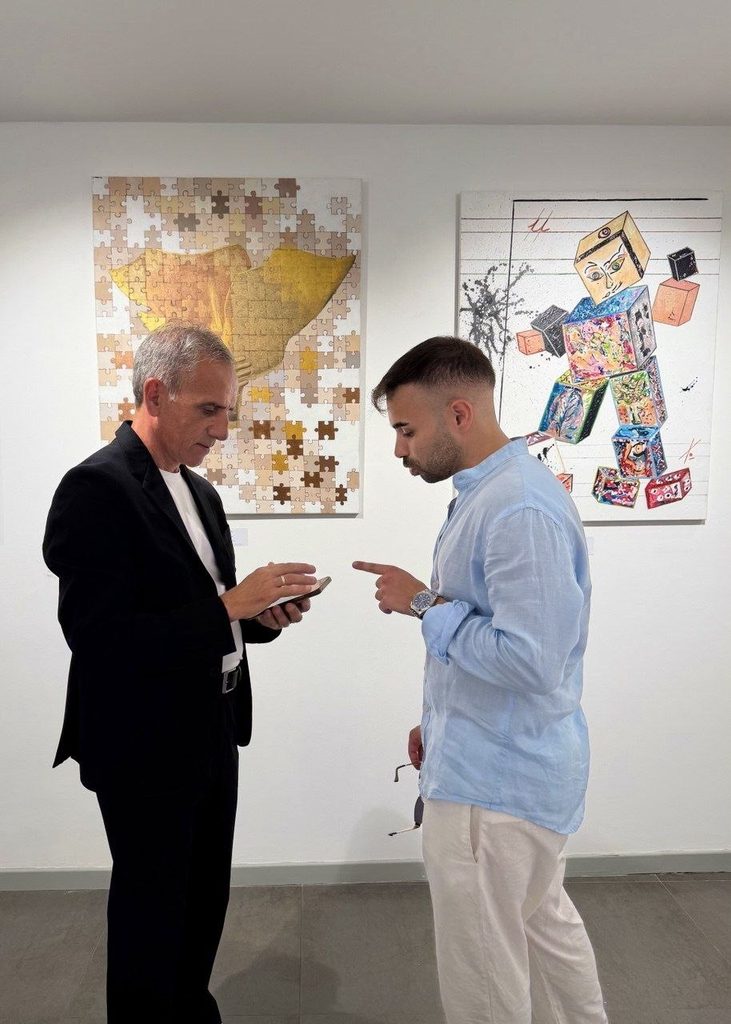
The story of Beyond Time in Italy began in Pulsano, in the Apulia region.
From July 24 to 26, Russian artists participated in the international T-Fest and its special T-Arte program. Their works were presented in the historic Convento dei Padri Riformati, where contemporary art entered into a direct dialogue with the architecture and history of the site.
After Pulsano, the artworks continued their journey to Sicily, to Taormina.
For a painting, such a journey means much more than simply changing exhibition venues. Every new space changes the perspective through which a viewer perceives the artwork.
A painting created within a particular cultural context may find itself before someone who knows nothing about the artist’s biography, is unfamiliar with Russian art, and is seeing such an artistic practice for the first time.
An International Exhibition as a Test of Art
This is one of the defining features of an international exhibition.
When familiar explanations and a known cultural context disappear, an artwork is left alone with the viewer. It must hold attention on its own, create an emotional response, and make a person stop.
“When familiar explanations disappear, what remains is essential: the ability of an artwork to evoke a feeling, hold the viewer’s gaze, and make them stop.”
That is why an international journey can be viewed as a kind of test of an artwork’s strength.
Why Taormina Became a Meeting Point
Taormina was not an accidental choice for such a project.
Here, the past does not look like the past. The ancient theater overlooks the sea, Mount Etna rises above the city, and an international flow of people constantly moves through its historic streets.
Italy and America, Britain and Europe, tourists and collectors, history and contemporary art meet in the same place.
As a result, contemporary art in Taormina inevitably enters into a conversation with history. The national identity of an artwork becomes only one part of how it is interpreted.
In August 2026, Russian art joined this dialogue.


Beyond Time at Taimeless Art Gallery
From August 7 to 9, 2026, Taimeless Art Gallery in central Taormina hosted the international Beyond Time project — “Beyond Time: A Dialogue Between Russia and Eternity.”
The exhibition space is located in an 18th-century historic building. The gallery presents works by renowned artists including Andy Warhol, Roy Lichtenstein, Joan Miró, Marc Chagall, and Lucio Fontana.
But the significance of Beyond Time is determined not only by the names of the artists or the status of the venue.
The main question is different: how is Russian art perceived by an international audience, and what happens to an artwork when it moves beyond its familiar cultural environment?
Three Professional Voices
Taimeless Art Gallery played an important role in the project and is represented by its owners, Francesco Cinici and Antonio Daventi. The gallery opened its Italian space to the project and made it possible for the artists to meet an international audience.
The project was also built through collaboration between Pichierri Art, represented by Maria Shakova and Maurizio Pichieri, and Zhurkina Art, represented by Galina Zhurkina.
The partnership developed through joint exhibition initiatives, curatorial work, professional communication, and ongoing exchange between artists.
Maria Shakova and Maurizio Pichieri participated in the project as curators and artists. Galina Zhurkina served as the project coordinator and an artist.
What emerged was not the familiar structure of “organizer — artists — venue,” but an interaction between three professional artistic environments.
Taimeless Art Gallery provided the project not only with walls, but also with its own audience, historical context, and international surroundings.
Pichierri Art was responsible for the curatorial and artistic components. The curatorial selection shaped the identity of the project.
Zhurkina Art became the link between the organizational side and the artistic content.
“It is precisely through connections like these that strong international projects are born today.”


Two Artists — One Dialogue
The curatorial work of Maria Shakova and Maurizio Pichieri is distinctive in another respect: the curators themselves remain inside the artistic process.
Their practice is based on a “four hands” approach, with both artists working simultaneously on a single canvas. There is no strict division between “my” part and “your” part — the artwork emerges directly through dialogue.
Their work Deviation becomes a kind of formula for the entire Beyond Time project.
To deviate means to leave a familiar trajectory and allow two artistic languages to create a third.
This is how genuine international cultural exchange works: one culture does not simply tell another culture about itself. Instead, a space of mutual influence emerges.
Editorial Insight
International dialogue is not about adapting art to the viewer. It is an opportunity to encounter another cultural experience while preserving one’s own artistic language.
Galina Zhurkina: Seeing What Was Previously Hidden
Beyond Time also has a less obvious dimension.
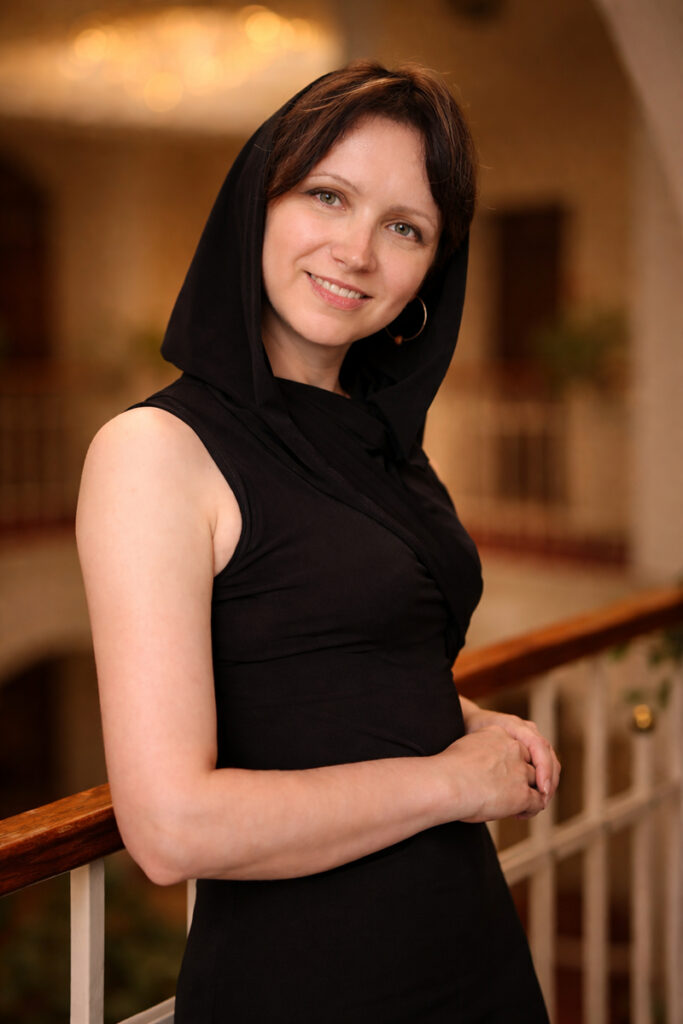
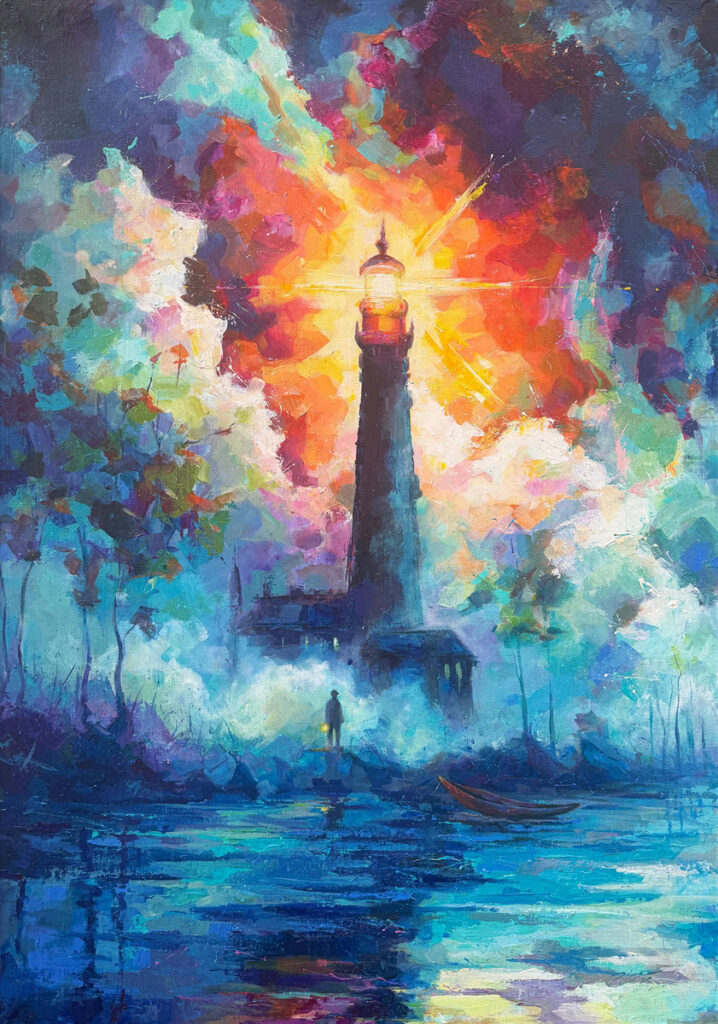
Galina Zhurkina served simultaneously as the project’s coordinator and an artist. Her work Where Things Become Visible is devoted to the moment of inner discovery, when something hidden suddenly becomes obvious.
A person stops looking for light exclusively outside themselves and discovers a guide within.
The work can also be seen as a parallel to the exhibition itself: an artwork truly becomes visible at the moment it encounters a viewer.
Different Artists — One Theme of Time
Beyond Time does not seek to unite its artists through a single style.
On the contrary, the strength of the project lies in the diversity of artistic languages. Each participant offers an individual way of speaking about time — through memory, movement, faith, technology, love, dreams, transformation, and inner experience.
Alla Aleshchenko: Time as a State
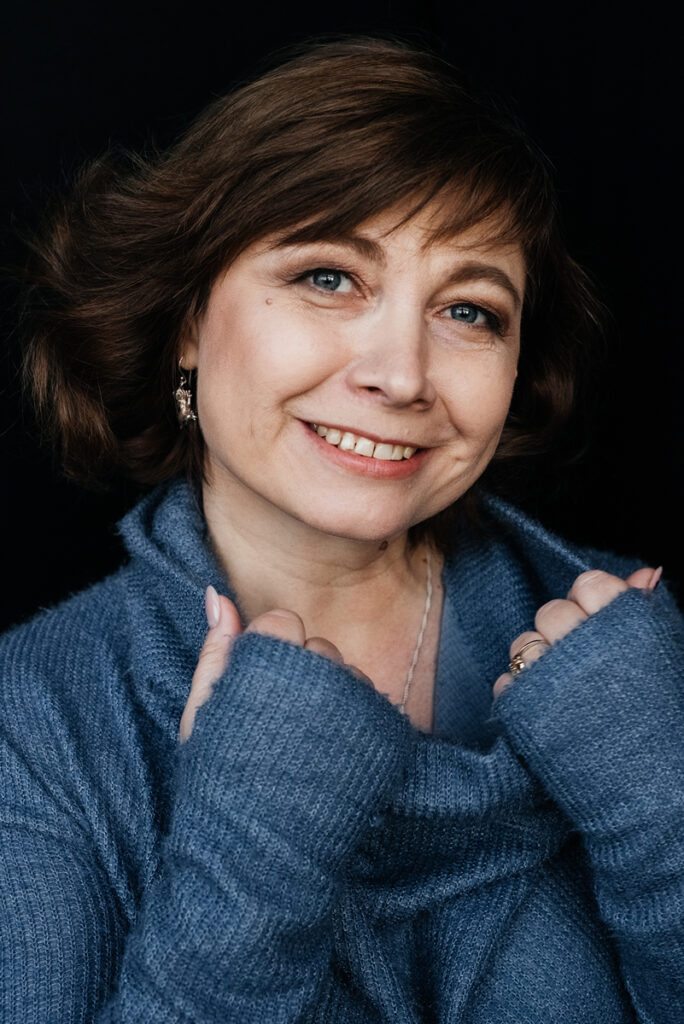

Alla Aleshchenko works at the boundary between photography and abstraction.
In Equilibrium, the photographic image gradually loses its connection to concrete reality and transforms into a system of lines and fields of color.
The viewer is confronted not so much with a landscape as with a state — a moment in which time seems to stop moving.
Anna Kuznetcova: Creating a New Reality
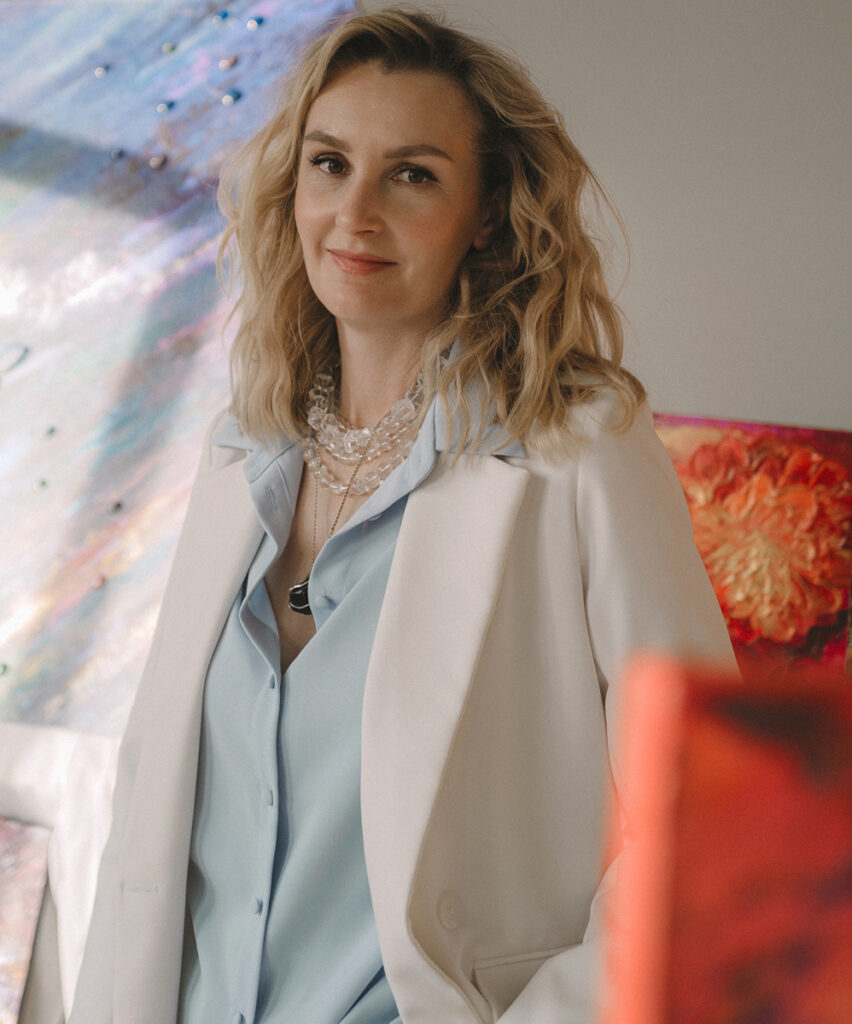

In New World, Anna Kuznetsova explores the idea of creating a new reality.
Eternity here is connected not only with the past. It emerges as the possibility for a person to change their own point of reference.
Ekaterina Babenko: The Inner Voice

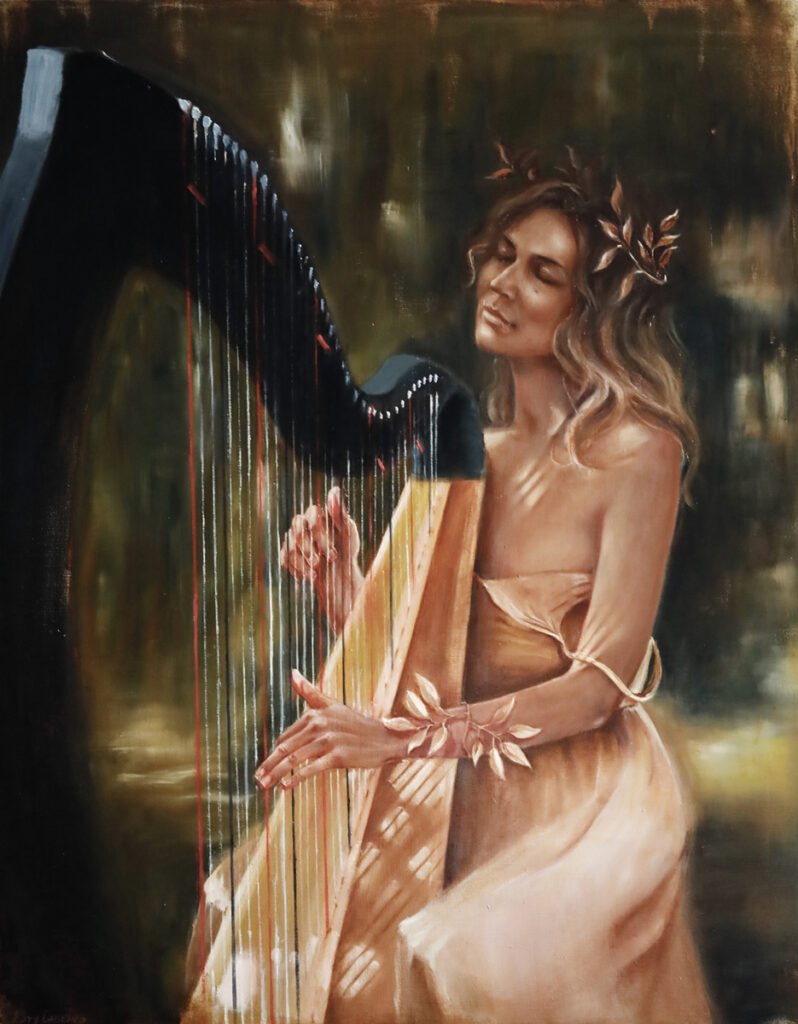
For Ekaterina Babenko, the conversation about time takes on an almost musical quality.
Harp. Strings of the Soul is a story about the inner voice. To hear oneself, one must touch something that cannot be measured by conventional instruments.
Kateryna Bim: An Ancient Image in Contemporary Light


Kateryna Bim, an artist with a background in theology, combines an iconographic image with a neon palette in Six-Winged Seraphim.
As a result, an ancient symbol begins to be perceived as a living contemporary image.
Danila Zhirov: Literary Memory
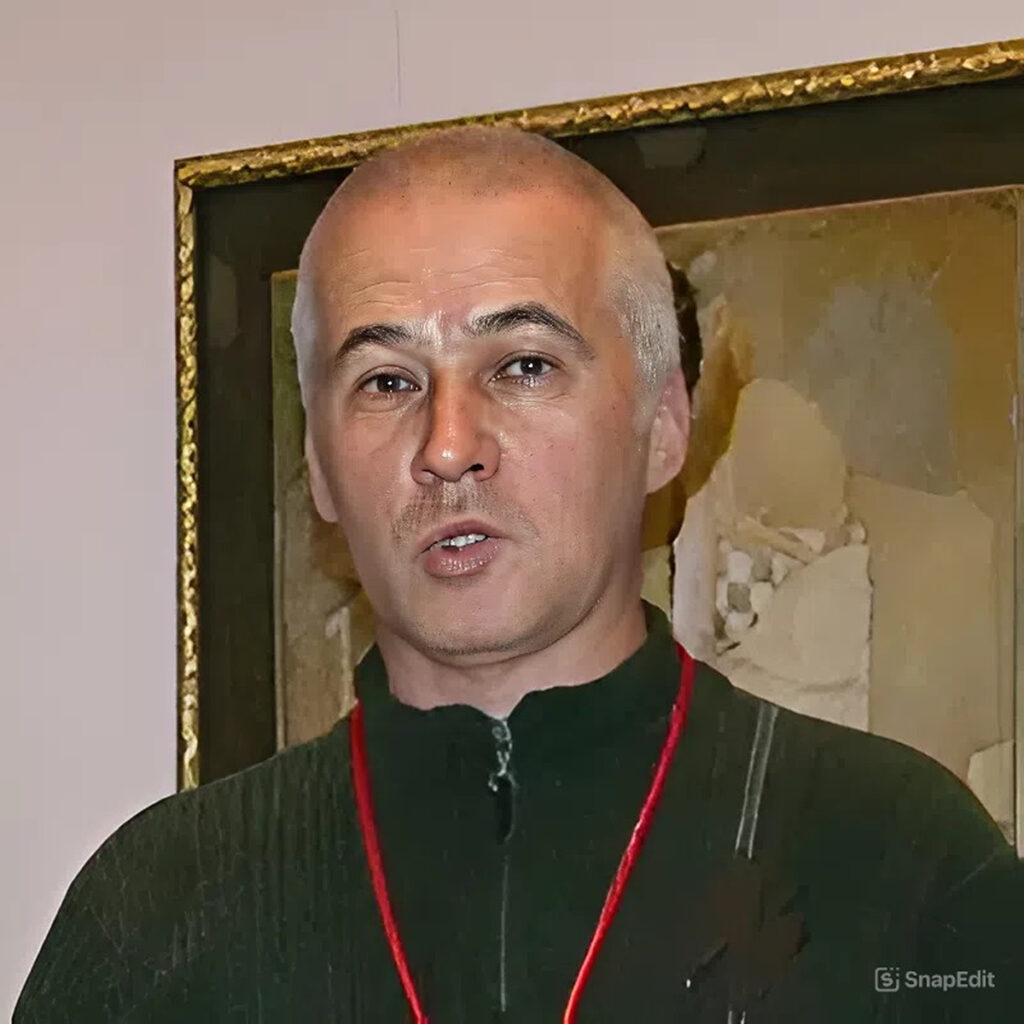

Danila Zhirov, represented by P.S. GRIGARTS Gallery, turns to literary memory and the world of Mikhail Bulgakov, particularly his novel The Master and Margarita.
In Still-life, the metaphysics of the novel is translated into a visual language: Moscow, love, memory, and the search for inner light.
The details of the work reveal themselves gradually, as if the viewer must enter the story independently.
Maria Marowa-Kalimbet: The Geometry of Time


For Maria Marova-Kalimbert, time takes on a geometric form.
In Night Geometry, a nighttime view from a terrace becomes a semi-abstract composition where the Constructivist tradition meets a contemporary artistic language.
Natalia Rastegaeva: The Metaphysics of Color


Natalia Rastegaeva speaks about time through the metaphysics of color.
Her works combine natural elements, changing seasons, the movement of life, and quiet moments of everyday existence.
Her painting addresses a state in which something fleeting becomes eternal.
Oksana Antonyukova: The Eternity of a Single Moment

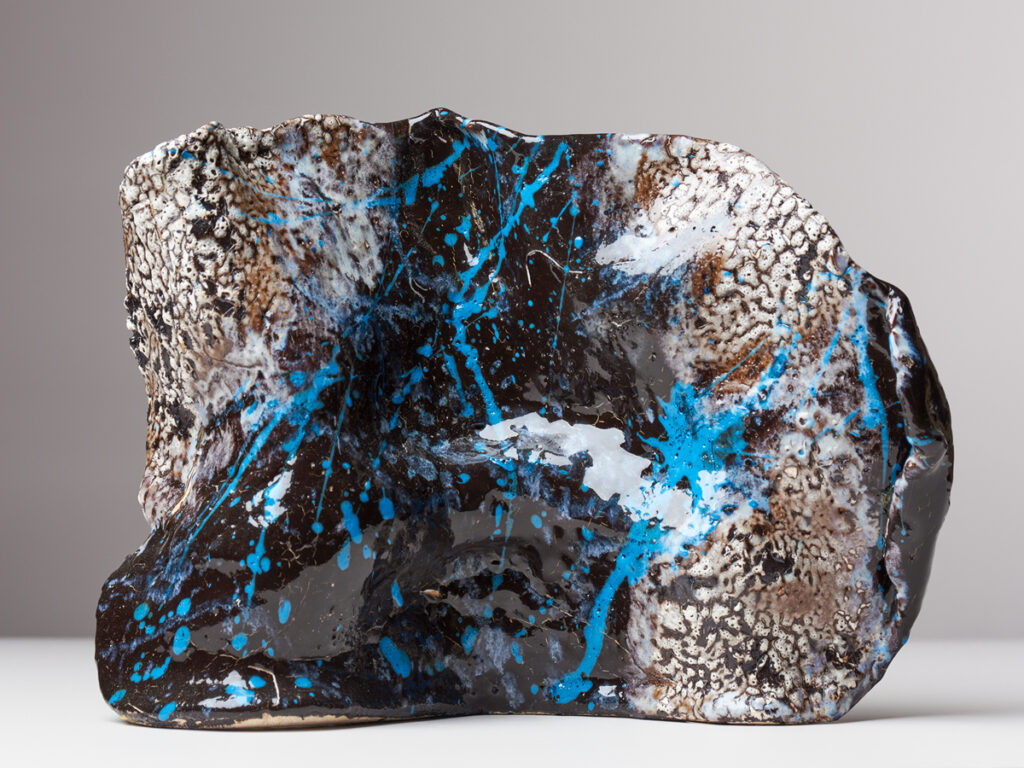
Oksana Antonyukova approaches a large theme through a small object.
A Moment of Eternity is handmade from chamotte clay.
Eternity here does not require monumental scale. It can exist within a single moment of experience.
Oksana Gidu: Family Memory


For Oksana Gidu, the story begins with family memory.
The Queen of the Night tulip variety was grown by her grandmother. In this case, the handmade form becomes a kind of bridge between generations.
Oksana Kashenko: Industrial St. Petersburg and Technology

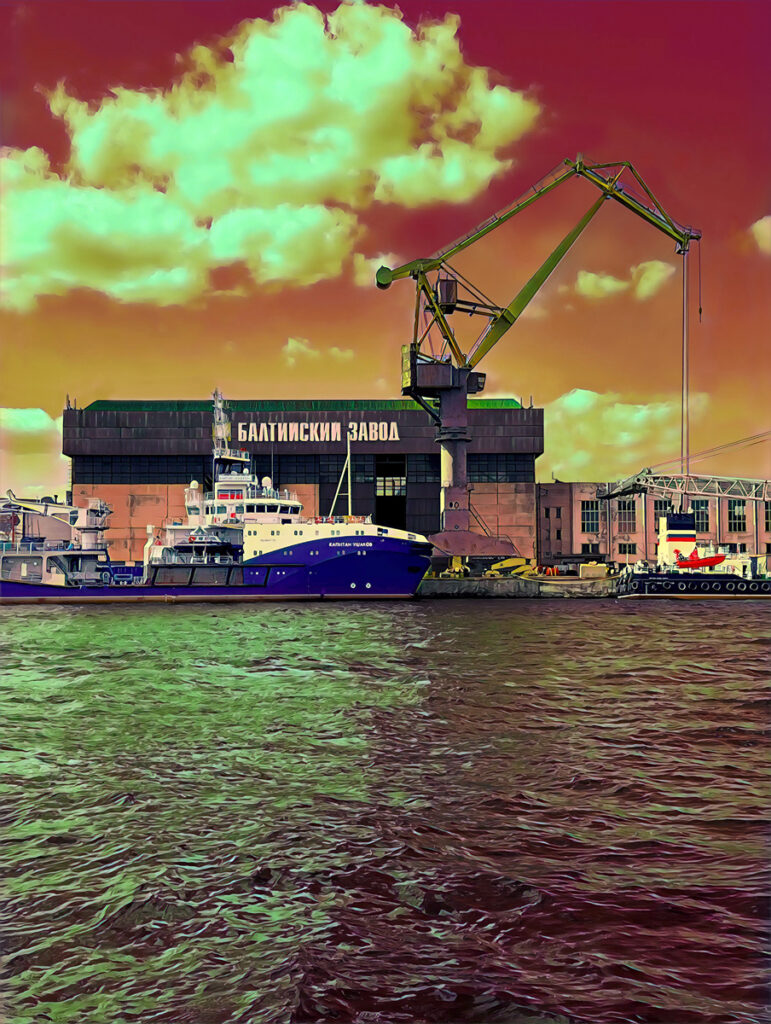
Oksana Kashenko looks at time through the industrial landscape of St. Petersburg — factories, water, and metal.
Photography is combined with digital processing, AI, and hand painting.
The heavy industrial environment is transformed into visual poetry.
Olga Khadar: Movement and Liberation
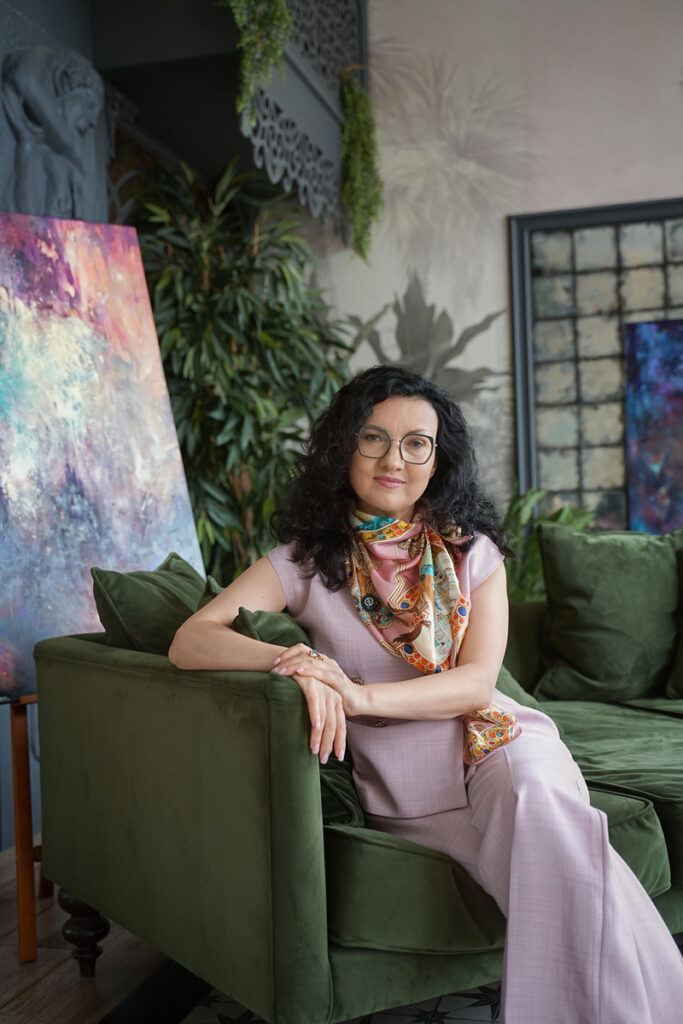

In Flight Over the Azure River, Olga Khadar takes the viewer beyond a familiar system of coordinates.
The image becomes a sensation of freedom, movement, and wind.
Olga Logunova: The Human Being as a Puzzle
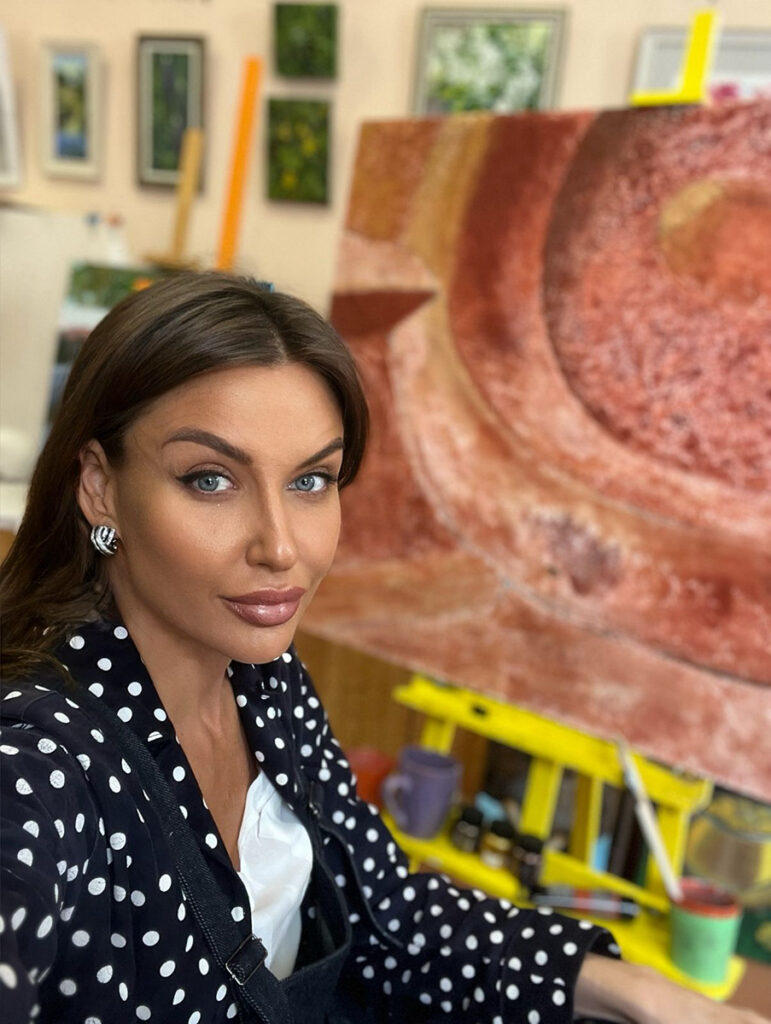
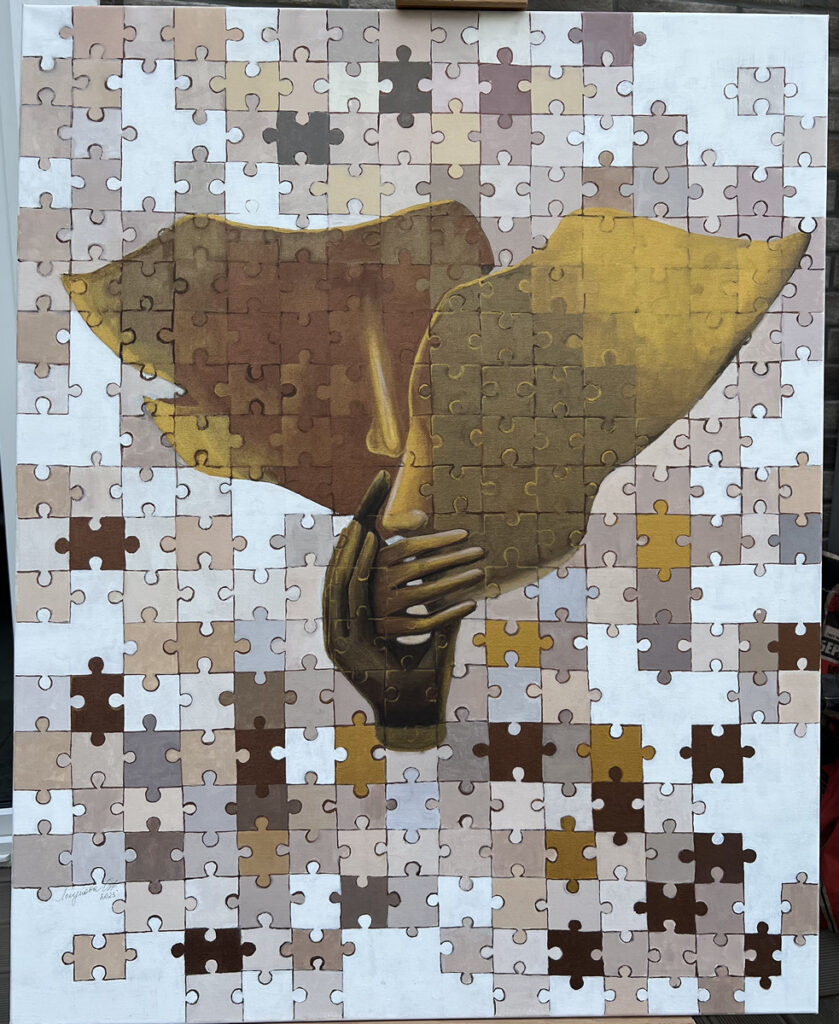
Olga Logunova proposes literally assembling a person like a puzzle.
In The Puzzle Has Come Together, identity is formed from lived experiences, love, trauma, and the need to be heard.
Irina Viznyuk: Inner Renewal

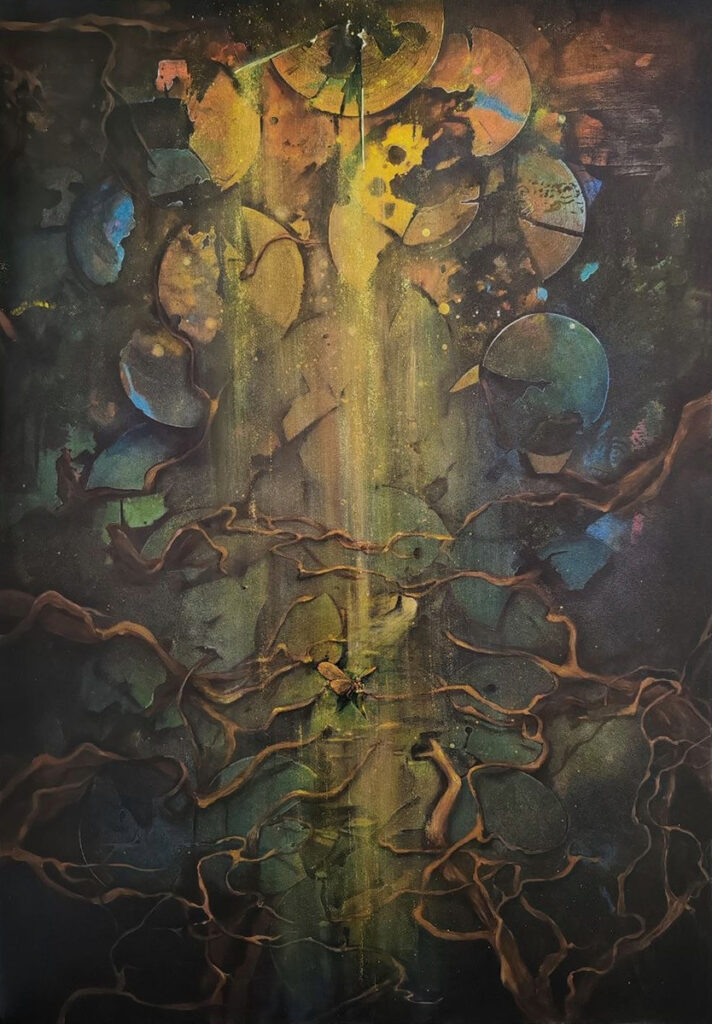
Irina Viznyuk’s work Dream addresses a state of inner renewal.
Here, sleep is not an escape from reality but a space in which a person can see themselves differently.
Irina Lee: The Precision of a Moment


In Tachytes — Wasps. Swiftness, Irina Li explores movement as the precision of a moment.
Energy gathers into a clear trajectory, turning transience into an independent artistic image.
Tatyana Ivanova: Pop Art and Spirituality


Tatyana Ivanova combines the language of Pop Art with spiritual themes.
In The King of Saints, contemporary visual culture encounters faith as a force capable of influencing the future.
Why Diversity Became the Exhibition’s Main Principle
The more closely one looks at the works of Beyond Time, the harder it becomes to identify a single common style.
And this is precisely what makes the project distinctive.
A unified style is not required here.
Time can be experienced as memory, movement, faith, technology, love, dreams, or transformation.
Each artist offers their own entry point into the subject.
Expert Insight
The diversity of artistic languages does not weaken the exhibition’s theme — it makes it more dimensional. One concept receives multiple interpretations, while the viewer gains the freedom to choose their own point of entry.
Beyond Time’s Main Audience Is International
Taormina has another important characteristic: it is a city with an international audience.
People from different nationalities and cultures constantly cross paths here. Many of them are English-speaking visitors from the United States, the United Kingdom, and other European countries.
For a significant number of Beyond Time visitors, Russian art was not a familiar part of their cultural itinerary.
And that is precisely what made the encounter particularly interesting.
A viewer does not necessarily need to know the artist or the history of the Russian art scene. They simply see the artwork and respond to it.
“This work makes you stop,” one visitor said.
“You don’t often see this kind of technique,” another noted.
These reactions become some of the most important evidence that an international dialogue has taken place.
From Exhibition Display to Collection
Some of the artworks found buyers among people from different countries.
For an artist, an international exhibition in such a case stops being merely an event on a calendar.
The exhibition ends, but the artwork receives a new address and a new viewer.
This is where an important boundary between exhibiting art and achieving genuine international presence emerges.
Being seen is the first step.
Being chosen is an opportunity to continue the journey.
Editorial Insight
The main result of an international exhibition is not only the number of visitors. What matters more is whether the artwork continues to live after the exhibition closes and whether a new dialogue with a viewer emerges.
Taormina Is Not the End
Beyond Time concluded its several exhibition days in a particular space, but it did not conclude the project’s story.
Pulsano became one point on the journey.
Taormina became another.
The next destination will be somewhere else.
What Remains After the Exhibition?
The title Beyond Time invites us to speak about eternity.
But perhaps something else is more important today — the ability of art to continue its journey.
The artworks come down from the walls. The artists leave. The exhibition ends.
But the paintings continue to live.
The real journey begins where the exhibition ends.
Time cannot be stopped. But an artwork can pass through it — not as a museum exhibit, but as a living experience that every new viewer makes their own again.
What Beyond Time Changed for Russian Art
After the exhibition ended, project participants addressed a question: how interesting is Russian art to the world today, and what did this international exhibition change?
The answers converged around one central point: there is interest.
But that interest becomes deeper when art does not try to make itself deliberately understandable to a foreign audience, but instead preserves its own artistic language.
Beyond Time was not an attempt to adapt Russian art to a new audience.
It was a step toward that audience.
That is why the journey from Pulsano to Taormina can be understood not as a completed exhibition story, but as one segment of a much longer path.
The journey of Russian art through the international cultural space continues.
Pulsano was one point.
Taormina was another.
And the road created by genuine cultural dialogue has no final address.
The photographs are provided by Taimeless Art Gallery and Pichierri Art.
FAQ
Beyond Time — “Beyond Time: A Dialogue Between Russia and Eternity” — is an international art project that brought together Russian artists and an Italian exhibition space in Taormina.
The Italian part of the Beyond Time project took place from August 7 to 9, 2026, at Taimeless Art Gallery in central Taormina, Sicily.
Taormina is a city with an international audience and a unique historical context where contemporary art can naturally enter into dialogue with Italy’s cultural heritage.
The project’s journey began in Pulsano, Apulia. From July 24 to 26, 2026, Russian artists participated in the international T-Fest and its special T-Arte program at Convento dei Padri Riformati.
The project was created through collaboration between Pichierri Art, represented by Maria Shakova and Maurizio Pichieri, and Zhurkina Art, represented by Galina Zhurkina. Taimeless Art Gallery served as the Italian venue.
The project featured Alla Oleshchenko, Anna Kuznetsova, Ekaterina Babenko, Kateryna Bim, Danila Zhirov, Maria Marova-Kalimbert, Natalia Rastegaeva, Oksana Antonyukova, Oksana Gidu, Oksana Kashenko, Olga Khadar, Olga Logunova, Irina Viznyuk, Irina Li, and Tatyana Ivanova.
The central theme of the project is time and its different artistic interpretations. The artists explore it through memory, movement, faith, technology, love, dreams, inner transformation, and personal experience.
The project presented Russian art within an international cultural context and created an opportunity for it to meet audiences from different countries directly.
One response to “Beyond Time in Taormina: How Russian Art Entered an International Dialogue”
[…] Beyond Time in Taormina: How Russian Art Entered an International Dialogue […]